The Ethics of AI and Emotional Intelligence

PAI Staff

About the Paper

About The Paper

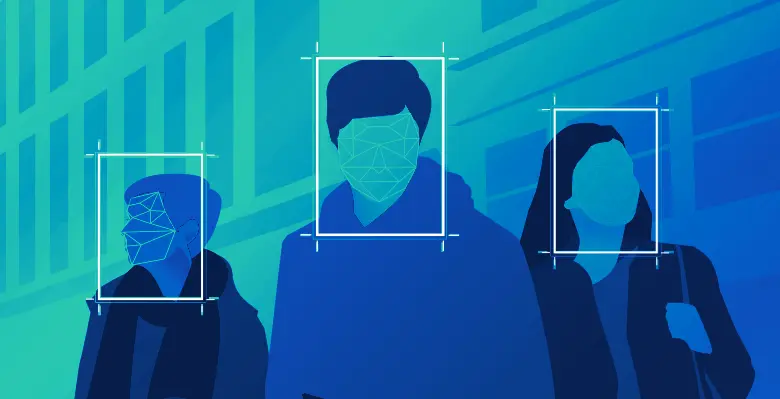
2019 seemed to mark a turning point in the deployment and public awareness of artificial intelligence designed to recognize emotions and expressions of emotion. The experimental use of AI spread across sectors and moved beyond the internet into the physical world. Stores used AI perceptions of shoppers’ moods and interest to display personalized public ads. Schools used AI to quantify student joy and engagement in the classroom. Employers used AI to evaluate job applicants’ moods and emotional reactions in automated video interviews and to monitor employees’ facial expressions in customer service positions.

It was a year notable for increasing criticism and governance of AI related to emotion and affect. A widely cited review of the literature by Barrett and colleagues questioned the underlying science for the universality of facial expressions and concluded there are insurmountable difficulties in inferring specific emotions reliably from pictures of faces. Barrett, L. F., Adolphs, R., Marsella, S., Martinez, A. M., & Pollak, S. D. (2019). Corrigendum: Emotional Expressions Reconsidered: Challenges to Inferring Emotion From Human Facial Movements. Psychological Science in the Public Interest, 20(3), 165–166. https://doi.org/10.1177/1529100619889954 The affective computing conference ACII added its first panel on the misuses of the technology with the aim of increasing discussions within the technical community on how to improve how their research was impacting society. Valstar, M., Gratch, J., Tao, J., Greene, G., & Picard, P. (2019, September 4). Affective computing and the misuse of “our” technology/science (Panel). 8th International Conference on Affective Computing & Intelligent Interaction, Cambridge, United Kingdom. Surveys on public attitudes in the U.S. Only 15% of Americans polled said it was acceptable for advertisers to use facial recognition technology to see how people respond to public advertising displays. It is unclear whether the 54% of respondents who said it was not acceptable were objecting to the use of facial analysis to detect emotional reaction to ads or the association of identification of an individual through facial recognition with some method of detecting emotional response. See Smith, A. (2019, September 5). More than half of U.S. adults trust law enforcement to use facial recognition responsibly. Pew Research Center. https://www.pewresearch.org/internet/2019/09/05/more-than-half-of-u-sadults-trust-law-enforcement-to-use-facial-recognition-responsibly/ and the U.K. Only 4% of those polled in the U.K. approved of analysing faces (using “facial recognition technologies”, which the report defined as including detecting affect) to monitor personality traits and mood of candidates when hiring. Ada Lovelace Institute (2019, September). Beyond face value: public attitudes to facial recognition technology (Report), 11. Retrieved from https://www.adalovelaceinstitute.org/wp-content/uploads/2019/09/Public-attitudes-to-facial-recognition-technology_v.FINAL_.pdf found that almost all of those polled found some current advertising and hiring uses of mood detection unacceptable. Some U.S. cities and states started to regulate private SB-1121 California Consumer Privacy Act of 2018, AB-375 (2018). https://leginfo.legislature.ca.gov/faces/billTextClient.xhtml?bill_id=201720180SB1121 See also proposed housing bills, No Biometrics Barriers to Housing Act. https://drive.google.com/file/d/1w4ee-poGkDJUkcEMTEAVqHNunplvR087/view (proposed U.S. federal) and Senate bill S5687 (proposed New York state) https://legislation.nysenate.gov/pdf/bills/2019/S5687 and government See Bill S.1385 (MA face recognition bill in process, as of June 23, 2020). https://malegislature.gov/Bills/191/S1385/Bills/Joint and AB-1215 Body Camera Accountability Act (Bill enacted in CA) https://leginfo.legislature.ca.gov/faces/billCompareClient.xhtml?bill_id=201920200AB1215. use of AI related to affect and emotions, including restrictions on them in some data protection legislation and face recognition moratoria. For example, the California Consumer Privacy Act (CCPA), which went into effect January 1, 2020, gives Californians the right to notification about what kinds of data a business is collecting about them and how it is being used and the right to demand that businesses delete their biometric information. The CCPA gives rights to California residents against a corporation or other legal entity operating for the financial benefit of its owners doing business in California that meets a certain revenue or data volume threshold. SB-1121 California Consumer Privacy Act of 2018, AB-375 (2018). https://leginfo.legislature.ca.gov/faces/billTextClient.xhtml?bill_id=201720180SB1121 Biometric information, as defined in the CCPA, includes many kinds of data that are used to make inferences about emotion or affective state, including imagery of the iris, retina, and face, voice recordings, and keystroke and gait patterns and rhythms. California Consumer Privacy Act of 2018, AB-375 (2018).

All of this is happening against a backdrop of increasing global discussions, reports, principles, white papers, and government action on responsible, ethical, and trustworthy AI. The OECD’s AI Principles, adopted in May 2019 and supported by more than 40 countries, aimed to ensure AI systems would be designed to be robust, safe, fair and trustworthy. Forty-two countries adopt new OECD Principles on Artificial Intelligence. OECD. Retrieved March 22, 2019, from https://www.oecd.org/science/forty-two-countries-adopt-new-oecd-principles-on-artificial-intelligence.html In February, 2020, the European Commission released a white paper, “On Artificial Intelligence – A European approach to excellence and trust”, setting out policy options for the twin objectives of promoting the uptake of AI and addressing the risks associated with certain uses of AI. European Commission. White paper On artificial intelligence – A European approach to excellence and trust, 1. https://templatearchive.com/ai-white-paper/ In June 2020, the G7 nations and eight other countries launched the Global Partnership on AI, a coalition aimed at ensuring that artificial intelligence is used responsibly, and respects human rights and democratic values. Joint statement from founding members of the global partnership on artificial intelligence. Government of Canada. Retrieved July 23, 2020, from https://www.canada.ca/en/innovation-science-economic-development/news/2020/06/joint-statement-from-foundingmembers-of-the-global-partnership-on-artificial-intelligence.html

At its best, if artificial intelligence is able to help individuals better understand and control their own emotional and affective states, including fear, happiness, loneliness, anger, interest and alertness, there is enormous potential for good. It could greatly improve quality of life and help individuals meet long term goals. It could save many lives now lost to suicide, homicide, disease, and accident. It might help us get through the global pandemic and economic crisis.

At its worst, if artificial intelligence can automate the ability to read or control others’ emotions, it has substantial implications for economic and political power and individuals’ rights.

Governments are thinking hard about AI strategy, policy, and ethics. Now is the time for a broader public debate about the ethics of artificial intelligence and emotional intelligence, while those policies are being written, and while the use of AI for emotions and affect is not yet well entrenched in society. Applications are broad, across many sectors, but most are still in early stages of use.

The Ethics of AI and Emotional Intelligence

About the Paper

Sources Cited

  1. Barrett, L. F., Adolphs, R., Marsella, S., Martinez, A. M., u0026amp; Pollak, S. D. (2019). Corrigendum: Emotional Expressions Reconsidered: Challenges to Inferring Emotion From Human Facial Movements. Psychological Science in the Public Interest, 20(3), 165–166. https://doi.org/10.1177/1529100619889954
  2. Valstar, M., Gratch, J., Tao, J., Greene, G., u0026amp; Picard, P. (2019, September 4). Affective computing and the misuse of “our” technology/science (Panel). 8th International Conference on Affective Computing u0026amp; Intelligent Interaction, Cambridge, United Kingdom.
  3. Only 15% of Americans polled said it was acceptable for advertisers to use facial recognition technology to see how people respond to public advertising displays. It is unclear whether the 54% of respondents who said it was not acceptable were objecting to the use of facial analysis to detect emotional reaction to ads or the association of identification of an individual through facial recognition with some method of detecting emotional response. See Smith, A. (2019, September 5). More than half of U.S. adults trust law enforcement to use facial recognition responsibly. Pew Research Center. https://www.pewresearch.org/internet/2019/09/05/more-than-half-of-u-sadults-trust-law-enforcement-to-use-facial-recognition-responsibly/
  4. Only 4% of those polled in the U.K. approved of analysing faces (using “facial recognition technologies”, which the report defined as including detecting affect) to monitor personality traits and mood of candidates when hiring. Ada Lovelace Institute (2019, September). Beyond face value: public attitudes to facial recognition technology (Report), 11. Retrieved from https://www.adalovelaceinstitute.org/wp-content/uploads/2019/09/Public-attitudes-to-facial-recognition-technology_v.FINAL_.pdf
  5. SB-1121 California Consumer Privacy Act of 2018, AB-375 (2018). https://leginfo.legislature.ca.gov/faces/billTextClient.xhtml?bill_id=201720180SB1121 See also proposed housing bills, No Biometrics Barriers to Housing Act. https://drive.google.com/file/d/1w4ee-poGkDJUkcEMTEAVqHNunplvR087/view (proposed U.S. federal) and Senate bill S5687 (proposed New York state) https://legislation.nysenate.gov/pdf/bills/2019/S5687
  6. See Bill S.1385 (MA face recognition bill in process, as of June 23, 2020). https://malegislature.gov/Bills/191/S1385/Bills/Joint and AB-1215 Body Camera Accountability Act (Bill enacted in CA) https://leginfo.legislature.ca.gov/faces/billCompareClient.xhtml?bill_id=201920200AB1215.
  7. The CCPA gives rights to California residents against a corporation or other legal entity operating for the financial benefit of its owners doing business in California that meets a certain revenue or data volume threshold. SB-1121 California Consumer Privacy Act of 2018, AB-375 (2018). https://leginfo.legislature.ca.gov/faces/billTextClient.xhtml?bill_id=201720180SB1121
  8. California Consumer Privacy Act of 2018, AB-375 (2018).
  9. Forty-two countries adopt new OECD Principles on Artificial Intelligence. OECD. Retrieved March 22, 2019, from https://www.oecd.org/science/forty-two-countries-adopt-new-oecd-principles-on-artificial-intelligence.html
  10. European Commission. White paper On artificial intelligence – A European approach to excellence and trust, 1. https://templatearchive.com/ai-white-paper/
  11. Joint statement from founding members of the global partnership on artificial intelligence. Government of Canada. Retrieved July 23, 2020, from https://www.canada.ca/en/innovation-science-economic-development/news/2020/06/joint-statement-from-foundingmembers-of-the-global-partnership-on-artificial-intelligence.html
Table of Contents
1
2

Bringing Facial Recognition Systems To Light

PAI Staff

An Introduction to PAI’s Facial Recognition Systems Project

An Introduction to PAI’s Facial Recognition Systems Project

Facial recognition. What do you think of when you hear that term? How do these systems know your name? How accurate are they? And what else can they tell you about someone whose image is in the system?

These questions and others led the Partnership on AI (PAI) to begin the facial recognition systems project. During a series of workshops with our partners, we discovered it was first necessary to grasp how these systems work. The result was PAI’s paper “Understanding Facial Recognition Systems,” which defines the technology used in systems that attempt to verify who someone says they are or identify who someone is.

A productive discussion about the roles of these systems in society starts when we speak the same language, and also understand the importance and meaning of technical terms such as “training the system,” “enrollment database,” and “match thresholds.”

Let’s begin — keeping in mind that the graphics below do not represent any specific system, and are meant only to illustrate how the technology works.

How Facial Recognition Systems Work

How Facial Recognition Systems Work

Understanding how facial recognition systems work is essential to being able to examine the technical, social & cultural implications of these systems.

Let’s describe how a facial recognition system works. First, the system detects whether an image contains a face. If so, it then tries to recognize the face in one of two ways:

During facial verification: The system attempts to verify the identity of the face. It does so by determining whether the face in the image matches a specific face previously stored in the system.

During facial identification: The system attempts to predict the identity of the face. It does so by determining whether the face in the image potentially matches any of the faces previously stored in the system.

Let’s look at these steps in greater detail

A facial recognition system needs to first be trained, with two main factors influencing how the system performs: firstly, the quality of images (such as the angle, lighting, and resolution) and secondly the diversity of the faces in the dataset used to train the system.

An enrollment database consisting of faces and names is also created. The faces can also be stored in the form of templates.

The first step in using any facial recognition system is when a probe image, derived from either a photo or a video, is submitted to the system. The system then detects the face in the image and creates a template.


There are two paths that can be taken

The template derived from the probe image can be compared to a single template in the enrollment database. This “1:1” process is called facial verification.

Alternatively, the template derived from the probe image can be compared to all templates in the enrollment database. This “1:MANY” process is called facial identification.


Click and drag the slider to see the importance of match thresholds


Beyond facial recognition

Sometimes facial recognition systems are described as including facial characterization (also called facial analysis) systems, which detect facial attributes in an image, and then sort the faces by categories such as gender, race, or age. These systems are not part of facial recognition systems because they are not used to verify or predict an identity.

1

Human-AI Collaboration Framework & Case Studies

PAI Staff

Overview

Overview

Best practices on collaborations between people and AI systems – including those for issues of transparency and trust, responsibility for specific decisions, and appropriate levels of autonomy – depend on a nuanced understanding of the nature of those collaborations.

With the support of the Collaborations Between People and AI Systems (CPAIS) Expert Group, PAI has developed a Human-AI Collaboration Framework, containing 36 questions that identify some characteristics that differentiate examples of human-AI collaborations. We have also prepared a collection of seven case studies that illustrate the Framework and its applications in the real world.

This project explores the relevant features one should consider when thinking about human-AI collaboration, and how these features present themselves in real-world examples. By drawing attention to the nuances – including the distinct implications and potential social impacts – of specific AI technologies, the Framework can serve as a helpful nudge toward responsible product/tool design, policy development, or even research processes on or around AI systems that interact with humans.

As a software engineer from a leading technology company suggested, this Framework would be useful to them because it would enable focused attention on the impact of their AI system design, beyond the typical parameters of how quickly it goes to market or how it performs technically.

“

“By thinking through this list, I will have a better sense of where I am responsible to make the tool more useful, safe, and beneficial for the people using it. The public can also be better assured that I took these parameters into consideration when working on the design of a system that they may trust and then embed in their everyday life.”

SOFTWARE ENGINEER, PAI RESEARCH PARTICIPANT

Case Studies

Case Studies

To illustrate the application of this Framework, PAI spoke with AI practitioners from a range of organizations, and collected seven case studies designed to highlight the variety of real world collaborations between people and AI systems. The case studies provide descriptions of the technologies and their use, followed by author answers to the questions in the Framework:

  1. Virtual Assistants and Users (Claire Leibowicz, Partnership on AI)
  2. Mental Health Chatbots and Users (Yoonsuck Choe, Samsung)
  3. Intelligent Tutoring Systems and Learners (Amber Story, American Psychological Association)
  4. Assistive Computing and Motor Neuron Disease Patients (Lama Nachman, Intel)
  5. AI Drawing Tools and Artists (Philipp Michel, University of Tokyo)
  6. Magnetic Resonance Imaging and Doctors (Bendert Zevenbergen, Princeton Center for Information Technology Policy)
  7. Autonomous Vehicles and Passengers (In Kwon Choi, Samsung)


VIEW THE FRAMEWORK AND CASE STUDIES        READ THE BLOG POST