
Guidance for Inclusive AI

Practicing Participatory Engagement

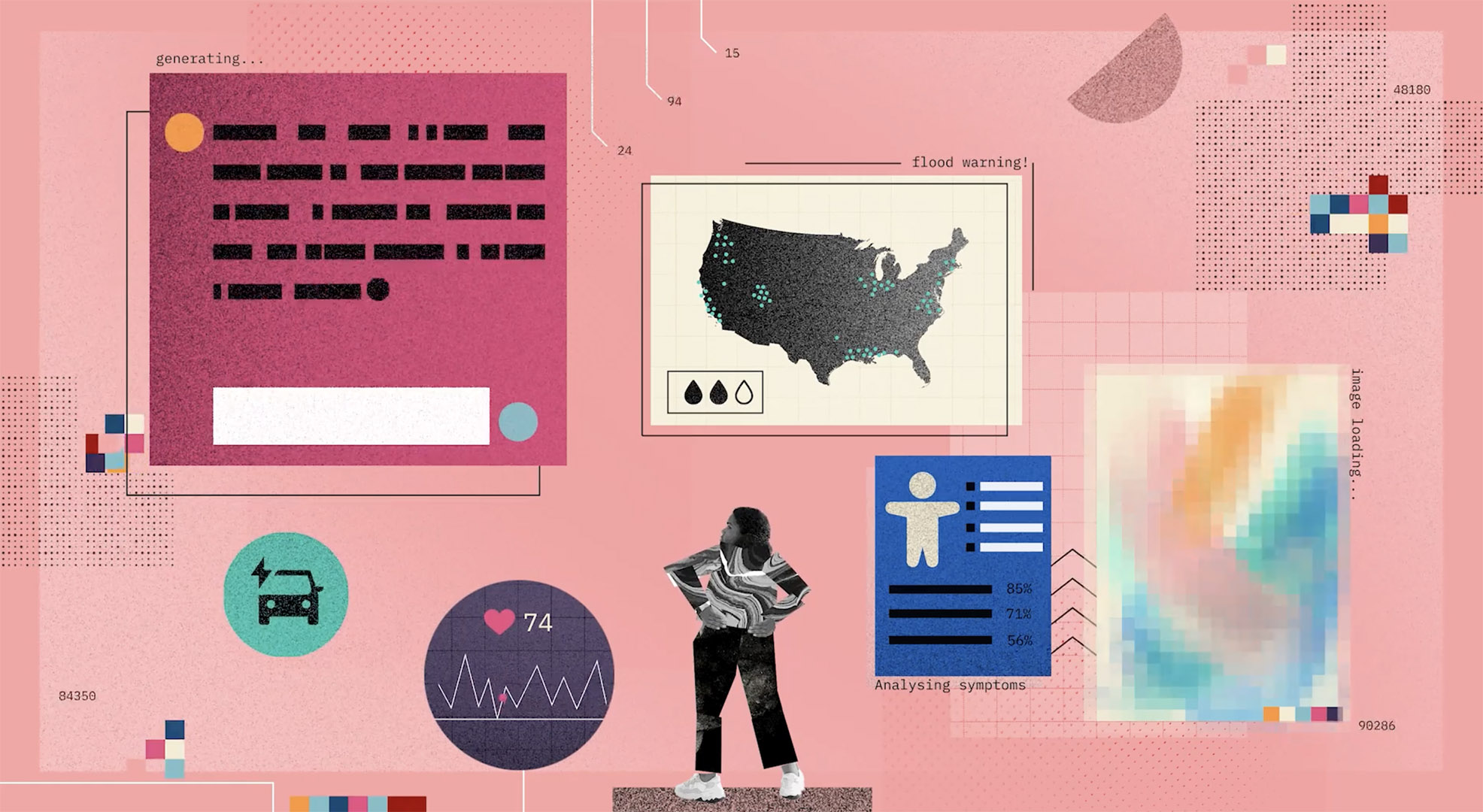
AI is reshaping our lives and society.

From its use for hiring decisions to healthcare diagnoses to how we consume media, we are already witnessing how data-driven technologies can help us address social inequality, but also how it can worsen it. Without the voices of those most affected in its development and deployment, we risk deepening the very divides we hope to close.

Yet, despite growing demand from the public and responsible AI advocates for approaches that draw in broader, more diverse communities to the AI decision-making process, product teams often struggle to move from theory to practice when engaging socially marginalized communities. As AI’s influence grows, it is more important than ever for the people and organizations who develop and deploy AI-driven systems to work in close partnership with those who are impacted by it. Everyone, from companies whose core business is developing AI systems to organizations adapting AI tools to improve their digital products, can ensure AI is developed and deployed more inclusively.

This framework supports AI developing and deploying teams navigating engagements with their clients, users, and those ultimately impacted by their AI systems in a manner that engenders trust and meets the needs of those most excluded.

PAI’s Guidance for Inclusive AI offers curated resources for practitioners and leaders in the commercial sector. Please select the role and level of experience most aligned with your needs.

Since 2023, PAI’s Global Task Force for Inclusive AI, a body of leading experts on participatory engagement practices from academia, civil society, and industry (specifically, PAI’s “Big Tech” Partners), have worked to develop new guidance for AI practitioners operating in commercial AI spaces. This framework of values, tactics, and practices helps developers and deployers work more closely with non-technical audiences.

The Guidance is meant to serve as a means to break down the complexity of public engagement strategies to more digestible, easier to navigate components. There is no perfect solution or one-size-fits-all framework for public participation. However, by thoughtfully considering each of these different dimensions of public engagement, it is possible to work within the limitations that arise with corporate-led public engagement activities to mitigate harms and work towards technology that improves everyone’s lives. PAI is committed to updating and evolving this resource to address new challenges and opportunities arising from new technological developments and the public’s understanding and involvement in AI governance.

BEYOND
THE CODE

We know that AI has the potential to transform how we live and work— but how is AI already making a difference for people and society?

Take a look beyond the code and explore how AI is making an impact on the environment, healthcare, and people’s lives.


What is AI?

Find out how AI models are created and trained to work with humans to help build our future world

Discover the ways AI is transforming how we live today


What contributions is AI making to our environment?


How is AI improving healthcare?


What impact is AI having on people’s lives?

About Partnership on AI

Explore how PAI works to ensure AI benefits people and society.

Find out more

Beyond the Code is a branded series presented by PAI and produced by BBC StoryWorks Commercial Production.

Copyright © 2024 BBC

How Bumble is preventing malicious AI-generated dating profiles


How can dating apps authenticate user profiles in the era of generative AI?

  • Bumble’s Photo Verification process requires users to provide unique photos to Bumble in order to validate the authenticity of their profiles. However, advances in generative AI technology have made using photos for validation increasingly challenging.
  • Bumble sought to balance two potentially conflicting goals: they sought to identify synthetic media when used to create fake or malicious profiles while simultaneously allowing individuals’ creative use of generative AI within their authentic profiles.
  • PAI’s Framework provided Bumble with a reference from which to identify the harm it sought to address, setting the stage for Bumble to roll out new policies on the use of synthetic media within the app.

This is Bumble’s case submission as a supporter of PAI’s Synthetic Media Framework. Explore the other case studies

Download this case study

How CBC News decided against using AI to conceal a news source’s identity


Can journalists ethically use AI to mask the identity of a confidential source?

  • CBC News explored using synthetic media to obfuscate faces of crime victims that did not want to be identified in order as a way to potentially enhance storytelling.
  • The CBC typically relied on methods such as face blurring and voice alteration in order to hide the identities of reporting subjects.
  • The Framework provided CBC with a set of AI-specific guidance to support its journalistic standards. Ultimately, the CBC did not use synthetic media, noting existing challenges regarding user perception of synthetic media and privacy concerns for the subject.

This is CBC News’s case submission as a supporter of PAI’s Synthetic Media Framework. Explore the other case studies

Download this case study

How the BBC used face swapping to anonymize interviewees


Is it possible to disclose AI use in a documentary without negatively affecting storytelling?

  • The BBC wanted to leverage AI tools to “face swap” interviewees in a documentary (instead of face blurring or pixelization) in order to more clearly tell a story.
  • The BBC knew it was necessary to be transparent about the use of AI and considered: how could they disclose to audiences that they were seeing synthetic faces?
  • By applying the Framework, the BBC was able to implement transparent direct disclosures that enabled documentary audiences to view the subjects without the bias that is typically inherent with traditional anonymization techniques.

This is the BBC’s case submission as a supporter of PAI’s Synthetic Media Framework. Explore the other case studies

Download this case study