



![$hero_image['alt']](https://partnershiponai.org/wp-content/uploads/2026/04/saige-expert-questions-1800x832-1.webp)
In 2026, conversations about AI and its impact on people, work, and society are everywhere–at a level that few could have predicted just five years ago. In this moment, we must look ahead and ask:
“What aspects of AI require more public attention and cross-sectoral collaboration now?”
Now in our tenth year, Partnership on AI has a long history of working with our cross-sectoral community on addressing the most urgent questions about AI. From designing best practices on the creation and use of AI-generated media well before the spread of deepfakes, to establishing a working group to investigate AI’s impact on labor years ahead of the gen-AI boom, we recognized early on some of the AI issues that would have profound impacts on society.
With the changing landscape, and the continuous evolution of both AI technology and its use by the public, we established a new advisory body of highly-respected interdisciplinary researchers and subject matter experts to help inform and guide PAI’s work. The SAIGE Council, which launched in 2025, contributes to building shared understanding around AI capabilities, impacts, and risks and to connect PAI’s work to similar efforts worldwide.
Looking ahead to the next wave of impacts, we asked four SAIGE Council members with expertise across philosophy, geopolitics, psychology, and law on what they see as the AI issue that requires more public attention and cross-sector collaboration. The following are their responses.
David Danks: How might AI change over time… and how might we change, individually and collectively?
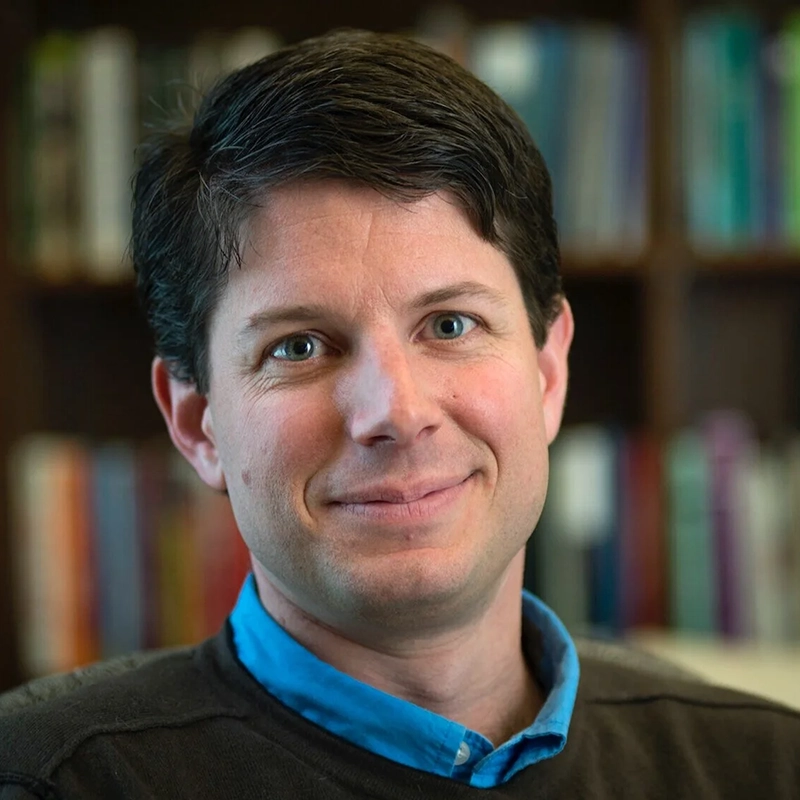
David Danks
Polk JSF Distinguished University Professor of Philosophy, Artificial Intelligence, & Data Science
University of Virginia
AI systems are no longer a novelty, but are increasingly becoming part of our everyday infrastructure. It is well-known that people adapt whenever a new technology enters their lives: we change our behaviors, expectations, relationships, and even our values. We should expect that long-term use of AI will similarly change how we act and think, perhaps in ways we want…but perhaps not. Right now, most of the focus on AI testing, safety, and governance is on the initial deployments and uses of a new system, rather than the long-term, dynamically changing, opportunities and risks. We should not only explore how an AI might change over time, but also how we might change, both individually and collectively. This shift would require rethinking how we measure and monitor AI systems, how we understand our own shifts over time, and how we determine what values matter for us collectively. It would involve a significant rethinking, across sectors and communities, of the ways that we decide whether to deploy and use AI.
Kofi Yeboah: Public AI architectures that aim for equitable distribution of AI’s economic benefits for all

Kofi Yeboah
Program Officer, AI and Compute
Mozilla Foundation
In the last two decades, the incentives for AI development and deployment have shifted from experimental scientific research, facilitating economic prosperity for all, and upholding democratic governance to unhealthy competition among AI companies and countries, driven by commercial gains, market dominance, and geopolitical leverage, while decentering the public interest. A Third Way is urgently needed to reset these economic incentives toward the public interest, and it is Public AI.
At the centre of Public AI are the collective AI priorities and shared values of humanity, shaped by non-extractive economic practices and grounded in equitable access to the foundational AI building blocks required for meaningful economic participation by all, especially the most underserved.
This requires intentional and creative collaborative efforts among governments, civil society organizations, AI companies, philanthropic foundations, academia, and other stakeholders to reimagine and co-create alternative but resilient Public AI architectures that aim for equitable distribution of AI’s economic benefits for all.
Molly Crockett: In what ways does AI threaten communities of knowledge? Can it support them instead?

Molly Crockett
Professor, Department of Psychology and University Center for Human Values
Princeton University
How does AI shape our ability to know the world together? There are limits to what any single person can know, but when we come together in communities of knowledge, we can dramatically expand the scope of what it is possible to know. In recent years, communities of knowledge have made progress by including more diverse kinds of knowers in the group project of knowing the world together. Many are excited about the potentials of AI models to further expand our knowledge of the world, but this technology overrepresents certain kinds of knowers: those who have dominated knowledge production in the past. In what ways does AI threaten communities of knowledge? Is there any way AI can support communities of knowledge instead?
Simon Chesterman: People may be overwhelmed by an unprecedented volume of content
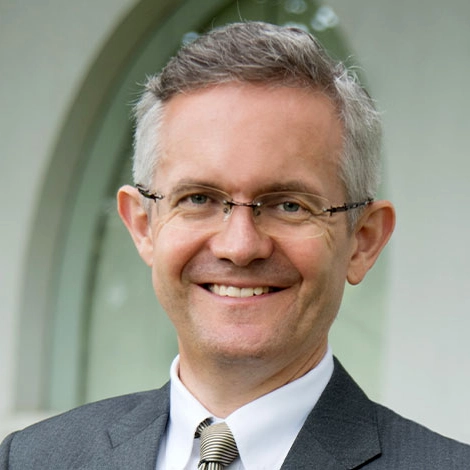
Simon Chesterman
David Marshall Professor of Law and Vice Provost (Educational Innovation)
National University of Singapore
Much of the public discussion about generative AI focuses on quality: whether outputs are accurate, persuasive, or realistic enough to deceive. That matters, but I believe the greater risk is quantity. The real challenge is not simply that people may believe a convincing lie. It is that they may be overwhelmed by an unprecedented volume of content — true, false, trivial, manipulative, and everything in between — making it harder to exercise judgment at all.
This is not just a technical problem. It is a governance problem, a market problem, and a civic problem. Governments need to support transparency, accountability, and public-interest institutions. Technology companies need to design for friction, provenance, and user agency rather than pure engagement. And users need better tools and habits for navigating information abundance.
The central question is no longer only whether AI can generate falsehoods. It is whether our societies can preserve attention, trust, and deliberation in an age of synthetic plenty.